Fun beginner-friendly workout Wine & hors d’oeuvres Raffles & prizes
This is a FREE event, but spaces are limited! Everyone age 21+ welcome!
Child care will be provided.
RSVP below!
Friday August 20 | 6 PM
CrossFit Local – 7401 Rex Rd #106 Chapel Hill
RESERVE YOUR SPOT NOW!!
COVID PROTOCOLS
– Professional cleaning staff thoroughly disinfects gym 2-3x/wk – Coaches wipe down high touch areas after classes – All equipment is wiped down after use – Small class sizes – Hand sanitizer located throughout facility – 25 ft tall ceilings, two 14 ft Big Ass Fans and two bay doors open for ventilation and air circulation – Large outdoor training area available – Since start of COVID-19, our facility has had zero transmission
Simply fill out the form below and then schedule Your FREE No-Sweat intro Consultation on the next page.
Shortly after we will be in touch with you to confirm your intro session.
We are excited to meet you!
Change MEMBERSHIP
If you want to change your membership such as the number of times per week you attend, the type of membership or add a punch pass, you’re in the right place. Just fill out the form below and we will get back to you.
If you would like to cancel your membership due to moving farther than 25 miles away or you have a medical condition you are required to provide proof of new residence or medical provider’s note.
HOLD MEMBERSHIP
As stated in your CrossFit Local Membership Agreement, you have the option to put your membership on hold as long as the hold is at least 7 days long and is made in advance of the dates requested. Your automatic recurring monthly membership bill will continue as usual, but the time requested extends the length of your membership.
Please fill out the form to put your membership on hold.
By filling out the form you are agreeing to the terms stated above.
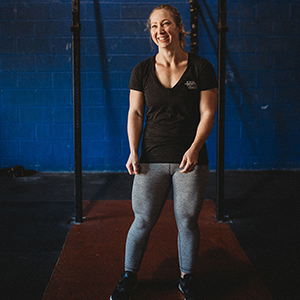
GRACE CONERLY
COACH
I am fully dedicated to helping every single one of you finally reach your goals.
After being fed up with a lack of results from her elliptical training sessions, Kelly came around to CrossFit. She started at home with Eva T’s bodyweight workouts. Due to a persistent, encouraging and very patient husband, she finally made her way into the box.
CrossFit has really changed her life, in only the most positive ways. Like many women, Kelly had always felt self-conscious of at least one part of her body. CrossFit has provided an environment where she not only embraced, but became proud of her body’s strength! This in turn has greatly influenced her self-esteem. CrossFit has changed her life is such radical ways that she wants to share this with others.
Kelly is a graduate of the University of North Carolina at Chapel Hill with undergraduate and graduate degrees in Nursing. When she is not in the box, she works as a relief nurse practitioner. She likes to read, watch theatre, cheer on the Tar Heels, play with her pups Kaiah and Comet, go fishing with her dad and spend time with her wonderful husband in her free time.
CERTIFICATIONS
CrossFit Level 2 Certified, 2021
CrossFit Level I Certified, 2011 & 2016
Olympic Lifting Seminar with Tony Cowden, 2011
BeastSkills Seminar with Jim Bathurst, 2011
Olympic Lifting Seminar with Caleb Ward, 2011
Head judge at the Tarheel Challenge for CrossFit UNC, 2011
Judge at the Carolina Fitness Challenge, 2011
USA Weightlifting Level I Certified, 2012
CrossFit Goal Setting Course with Greg Amundson, 2012
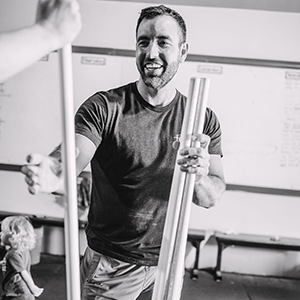
Chad embodies what it means to be physically active and mentally strong. His lifelong commitment to fitness began with his earliest experiences as a Boy Scout, which provided a solid foundation for his capacity to learn, teach, and lead. While in high school, despite playing both soccer and baseball as well as maintaining his status as an honor student, he attained the coveted Eagle Scout distinction.
At the University of North Carolina at Chapel Hill he earned both Bachelor of Arts in Exercise and Sports Science and Bachelor of Arts in Psychology degrees. During his time at UNC, he realized his enthusiasm for coaching while working at the Student Recreation Center and Rams Head Recreation Center. He also served as the Intramural Sports Captain for the Carolina Baptist Student Union.
After graduation, Chad worked as a personal trainer at local gyms, continually refining and honing his skills. Some of his original clients have followed him to Local. With over a decade in the fitness industry, Chad has coached all levels of physical fitness, from the elderly to the high-caliber athlete.
Chad’s understanding of the human body, and its potential to rehabilitate itself and excel, allow him to coach his clients in the most efficient and effective way. The variety of functional movements performed at high-intensity, which is a hallmark of CrossFit, leads to real, tangible results. Chad has seen the changes in his own life, both in performance and overall well-being, from implementing the CrossFit modalities. He is always excited to share that wisdom and passion with his clients.
Fitness is not just a job for Chad, it is a way of life. He is committed to providing the community with a place where he can assist clients in realizing not only their personal fitness goals but goals that allow them to grow personally. He is happy to report that while in California, he visited the original CrossFit and trained with Eva T. He loves to hunt, fish and spend time outdoors. In his free time, Chad enjoys spending time with his wife Kelly, daughter Evelyn and their puppies Kaiah and Comet.
CERTIFICATIONS
CrossFit Level 2 Certified, 2020
CrossFit Level I Certified, 2010 & 2015
CrossFit Movement and Mobility Seminar with Kelly Starrett, 2010
CrossFit Gymnastics Seminar with Jeff Tucker, 2010
CrossFit Endurance Certified, 2011
CrossFit Kids Certified, 2011
Voted one of best personal trainers in Triangle, 2011, 2012
USA Weightlifting Level I Certified, 2012
CrossFit Goal Setting Course with Greg Amundson, 2012
Tough Mudder, Warrior Dash and Adventure Race Competitor
4th place in 85kg weight class, Triad Barbell Meet, 2011
To Request a membership hold, please fill out the form below. Warning, by filling out this form your membership will not be put on hold. This form is simply a way to let us know you would like to request a membership hold. We will then review your request, then reach out to you to confirm.
MEMBERSHIP CANCELLATION REQUEST
Please fill out the form below and one of our team members will review your request. Warning. The submission of this form does not cancel your membership. We will review your request, then reach out to confirm.
HAVE QUESTIONS?
We Would Love To Meet You!
Simply fill out the form below & one of our amazing coaches will be in touch asap!
We are excited to meet you!
ARE YOU LOOKING TO DROP-IN?
We Would Love To Meet You!
We love nothing more than having visitors from other boxes come “throw down” with us! If you are just passing through, we charge a drop in fee of $25 per day that includes a t-shirt! If you want to do Open Gym only, contact us for rates.